Digital Transformation & Inclusive Design
I specialise in leading digital transformation that strengthens how organisations design, build, and scale their products. My work spans strategy, process, and capability building - from maturing ways of working and driving cross-functional alignment to embedding inclusive design and accessibility into everyday delivery. I help teams create digital experiences that are consistent, high-performing, and genuinely user-centred, ensuring that transformation improves how every customer interacts with a product.
Leading an Accessibility Transformation
TUI Group
When I joined TUI, accessibility maturity across the digital organisation was low. There were people who cared about accessibility and some good work was already happening, but efforts were fragmented and accessibility was not yet embedded consistently across teams or the customer experience. A public Civil Aviation Authority (CAA) audit also highlighted accessibility issues across the website.
As UX Practice Lead, I took on the task of driving accessibility improvements across TUI websites. This meant not only improving the customer experience, but also changing the practices, skills and ways of working needed to make accessibility sustainable.
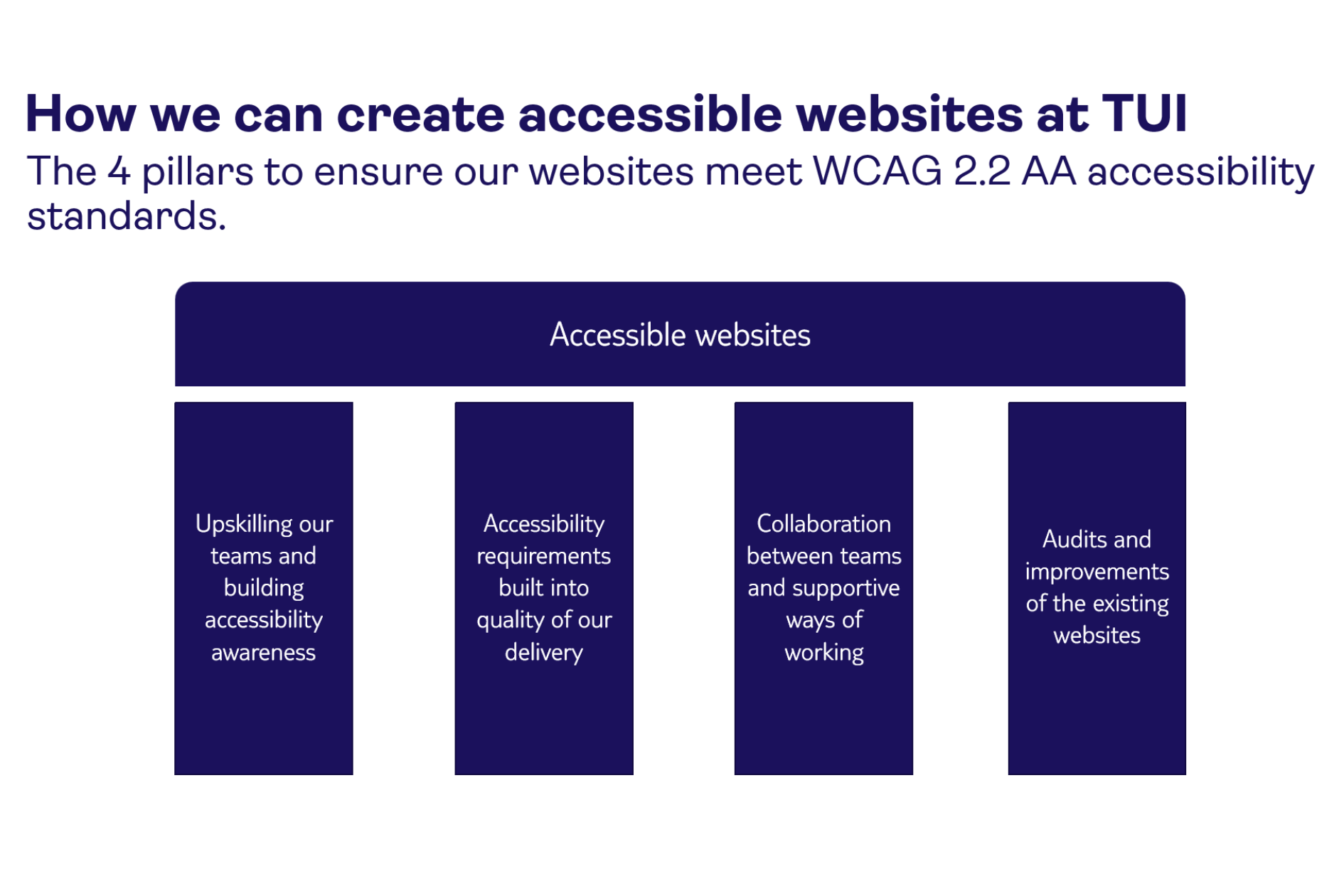
I developed and rolled out an accessibility strategy built around four pillars:
-
Upskilling teams and increasing accessibility awareness
-
Embedding accessibility into our definition of quality and delivery processes
-
Fostering cross-team collaboration and shared ownership
-
Auditing and improving existing websites to meet WCAG 2.2 AA standards
This framework helped shift accessibility from a siloed responsibility to an integrated expectation across the digital organisation.
Accessibility at TUI: Progress & Impact
Delivering WCAG 2.2 AA-level experiences became a core E-Commerce objective. Based on the accessibility strategy and framework I proposed, we made significant progress in both organisational capability and the accessibility of the customer experience.
- Accessibility training was rolled out across digital teams, helping teams embed accessibility into everyday delivery
- Cross-discipline and cross-market collaboration increased shared ownership across product, design, development, content and testing
- Common accessibility standards, processes, tools and ways of working were established across teams
- I authored the Digital Accessibility Policy and developed our Accessibility Maturity Model
- Our internal accessibility maturity measure increased by 325%
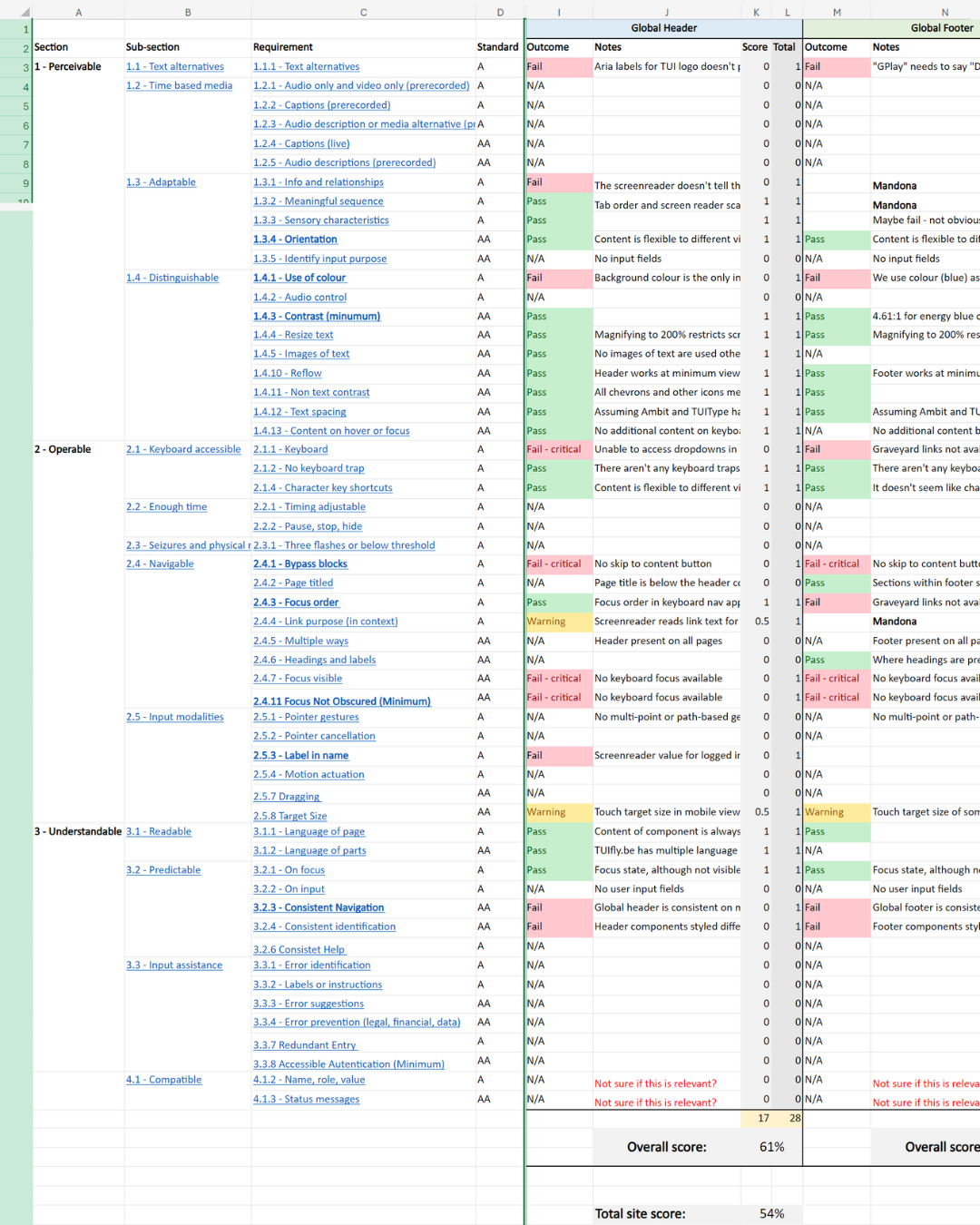
- 37 key pages were manually audited and 31 critical user journeys assessed and prioritised for improvement
- We grew from only a handful of accessible digital features to more than 100 across the customer journey
- Accessibility requirements became embedded in new development and increasingly integrated into the Design System
To support teams in delivery, I established and led the TUI Web Accessibility Group, a cross-functional community of nearly 30 Accessibility Champions. The group provided hands-on support through tooling implementation, structured processes, audits, training, awareness building and weekly Accessibility Clinics.
To encourage broader engagement, I created and managed the MS Teams Accessibility Channel, which grew to more than 350 members. It became a central hub for guidance, updates, shared learning and conversations across markets.
This work helped embed accessibility more consistently across teams, processes and the wider customer experience.
I’ve written a deeper article about the four-pillar framework, the organisational change behind it and what I learned along the way.
Read the full storyDigital Transformation
Macmillan Cancer Support
As Senior UX Manager (Lead UX/UI Designer), I played a key role in Macmillan’s multi-year Digital Transformation Programme - a major rebuild of the organisation’s digital estate, including the migration to Sitecore and the redesign of core user journeys.
I led and supported the UX/UI team from the very start of the programme, contributing user insights, analytics, earlier research, and strategic UX direction to guide the new platform. I played an active SME role in workshops with our implementation partner (Endava), reviewed and validated designs, informed delivery decisions, and ensured accessibility, usability and user needs were embedded throughout.
Working closely with internal teams and the agency, I helped shape the experience across some of Macmillan’s most important digital touchpoints - from the donation journey and cancer information content to product-led sites and reusable components that would later form the basis of the design system.
Improving the Donation Journey
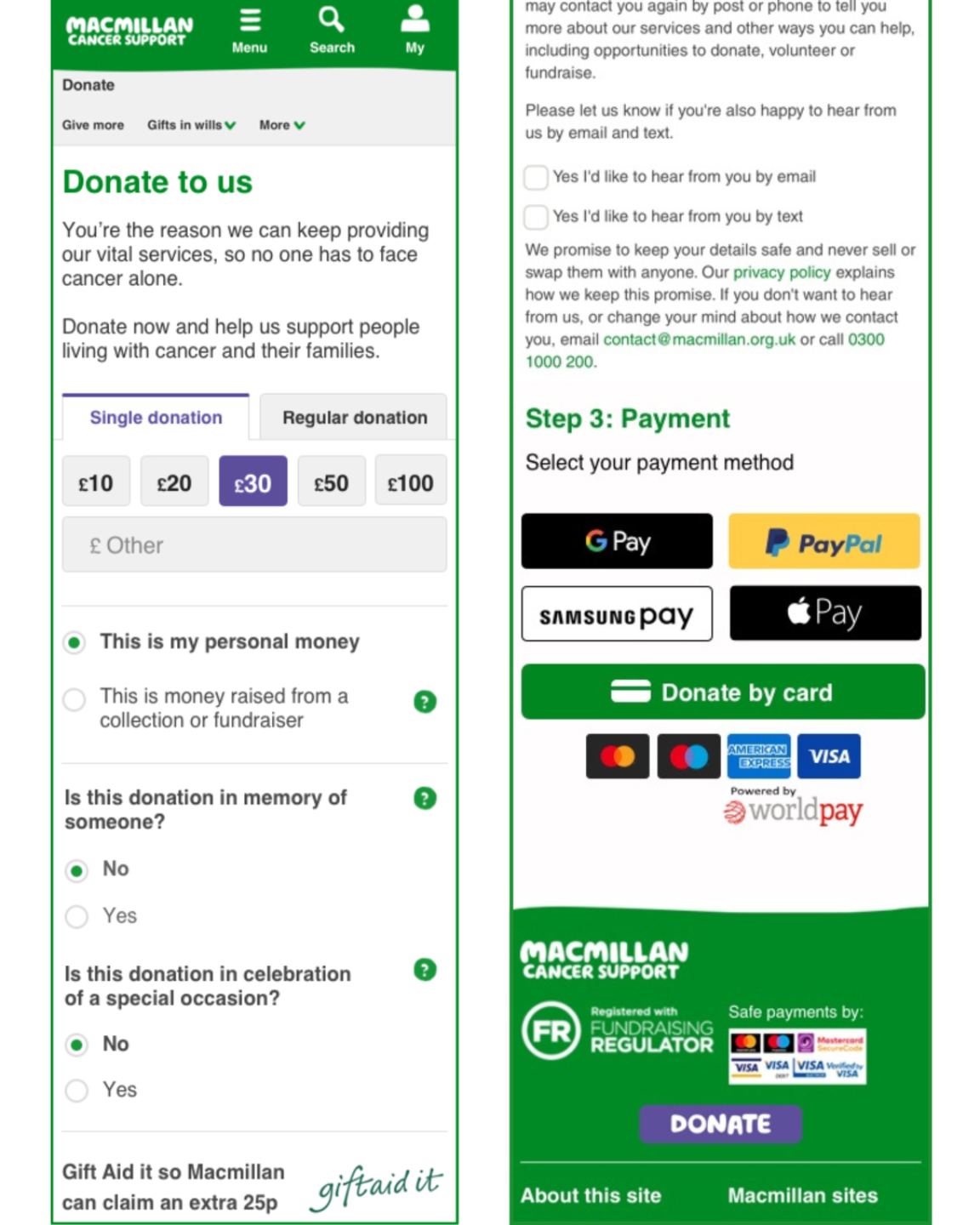
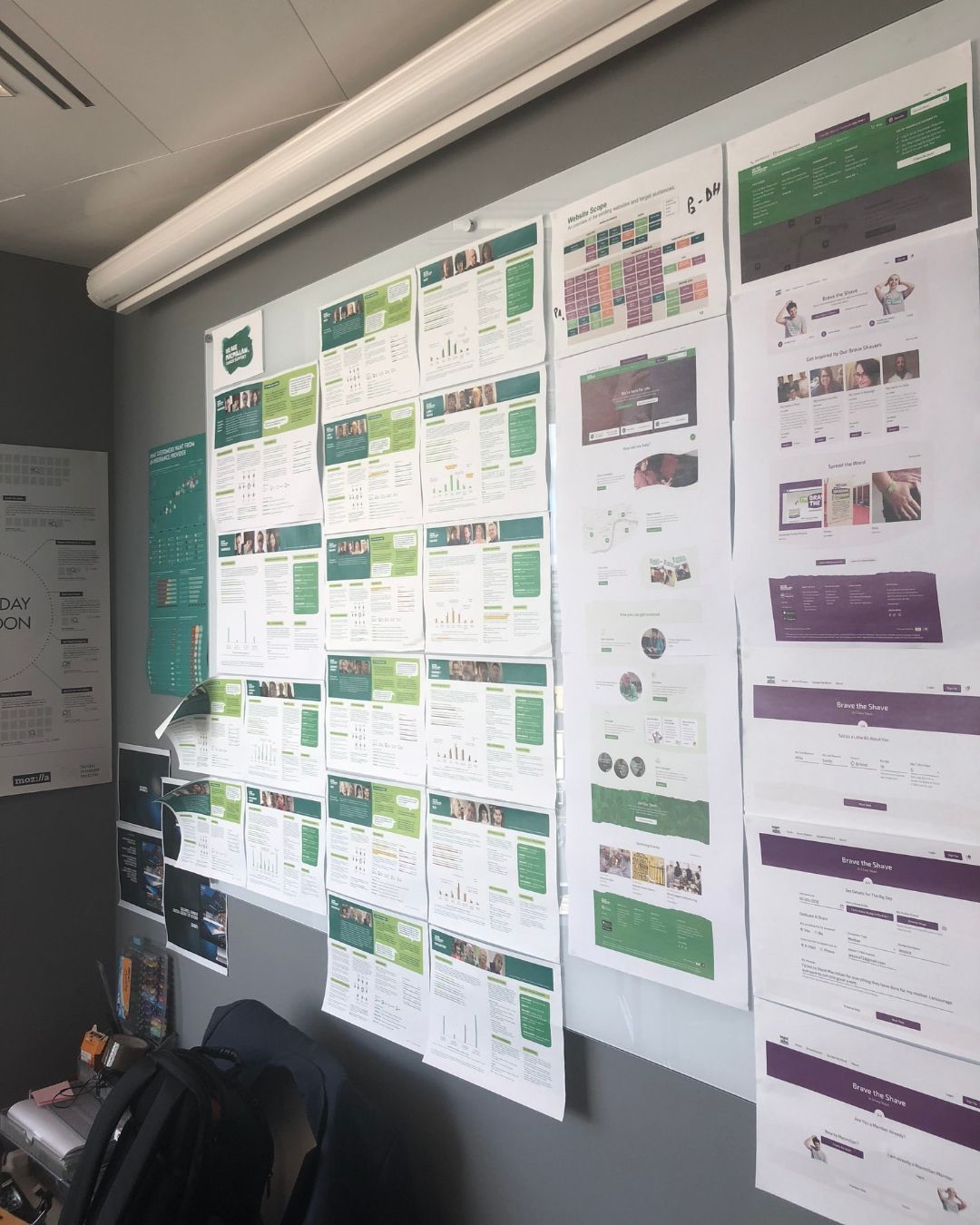
Before the main transformation began, I led a major redesign of Macmillan’s primary donation journey. The original experience was confusing, particularly on mobile, and users often struggled to understand where to begin.
Macmillan raises more than £230 million in voluntary donations each year, and while this total comes from a wide range of fundraising activities, the main online donation journey remains one of the charity’s most important digital revenue channels. Ensuring that this journey was clear, accessible and easy to complete was key to supporting Macmillan’s long-term fundraising sustainability.
Through evaluation, testing and iterative refinement, I created a clearer, more intuitive experience that significantly improved conversion and clarity. I introduced better hierarchy, completely redesigned the user journey, simplified language and introduced more supportive donation amount selection.
Introducing PayPal immediately increased conversion - 287 PayPal donations were made in the first seven days, totalling over £15,000.
These early improvements became the foundation for the donation experience later adopted and evolved within the new Sitecore platform.
Leading UX/UI Through the Sitecore Replatform
Throughout the replatforming phase, I led the UX/UI team in shaping the new Sitecore experience in partnership with Endava. My responsibilities included:
-
providing user insights, analytics and earlier research to guide strategic decisions
-
collaborating closely with Endava on journey structures, content patterns and component behaviour
-
reviewing and signing off designs to ensure clarity, usability and accessibility
-
validating decisions through UX principles and identifying risks or gaps
-
embedding accessibility and inclusive design from the outset
-
participating in programme workshops as the UX subject-matter expert
This phase established the core templates, patterns and components that the in-house team would later refine, optimise and scale.
Impact & Recognition
The transformation modernised Macmillan’s digital presence and strengthened its internal capability to deliver clear, accessible, user-centred experiences at scale.
Key outcomes included:
-
a modern, responsive, accessible digital platform
-
improved clarity and performance across core user journeys
-
a scalable design system enabling consistent delivery across teams
-
stronger UX maturity, governance and design capability
-
consistently positive real-world feedback from users
-
tangible uplift in key journeys, including donation and information pathways
The programme was recognised externally with a Digital Transformation of the Year nomination - highlighting the scale, complexity and impact of the work delivered across design, engineering, content and operations.

Enhancing the Experience In-House
After the Sitecore platform launched, I led the UX/UI team through a sustained period of analysis and optimisation across Macmillan’s digital ecosystem. Rather than remapping journeys entirely, our focus was on:
-
analysing how users interacted with high-value journeys
-
identifying points of friction, drop-off and confusion
-
refining interaction patterns, templates and content layouts
-
improving clarity, structure and flow in areas such as cancer information pages, donation flows and product-led microsites
-
maturing reusable components and guidance into a design system used across teams and suppliers.
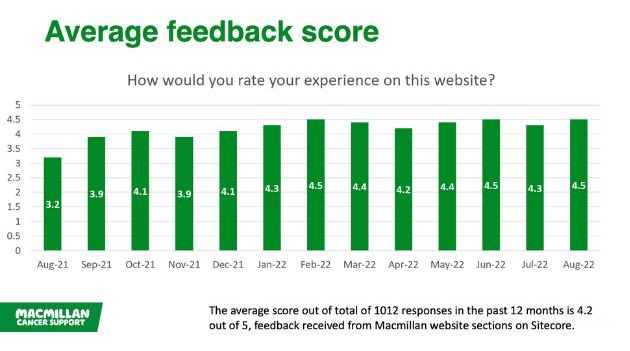
This continuous optimisation produced meaningful improvements. Over a 12-month period, more than 1,000 users rated their experience on the site, resulting in an average score of 4.2 out of 5 - a clear signal that the redesign and iterative improvements were delivering real value.
The evolution of the design system played a key role in this phase, enabling consistency, accessibility and efficiency across Macmillan’s digital estate.
How I Can Help
I support organisations with UX, accessibility, Design Ops and digital transformation. This can include improving design maturity and ways of working, building and developing UX teams, coaching and mentoring, strengthening cross-functional collaboration, and embedding inclusive, user-centred practices into everyday delivery.
Get in touch