Scaling Design Systems
I lead the creation and evolution of scalable design systems that unify brand, accessibility, and product experience - enabling consistent, accessible, and user-centred digital experiences at scale.
Design System
Macmillan Cancer Support
When I joined Macmillan in 2017, our digital presence was large but fragmented. With over 40 websites managed by different teams and suppliers, design patterns were inconsistent, accessibility guidance was unclear, and no shared documentation existed to guide the creation of new digital experiences. It became clear that we needed a unified, scalable design system to support quality, efficiency and brand consistency across the organisation.
Initial State of Digital Experience
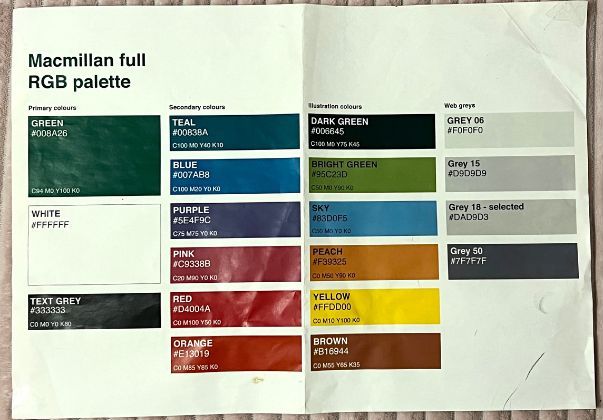
At the time, the only “design system” we had was an A3 sheet containing a few colours and basic typography. Every website had been interpreted differently, which resulted in visual inconsistency, duplicated design effort, and a diluted brand identity across Macmillan’s digital estate. This made it difficult to scale delivery, onboard suppliers, or ensure consistent quality across products.
Building Macmillan’s First Digital Design System
Over the following years, I led the creation and long-term evolution of Macmillan’s first Digital Design System. My remit was to define and lead a scalable design system strategy - establishing standards, interaction patterns, accessibility requirements, and reusable components and templates across the organisation.
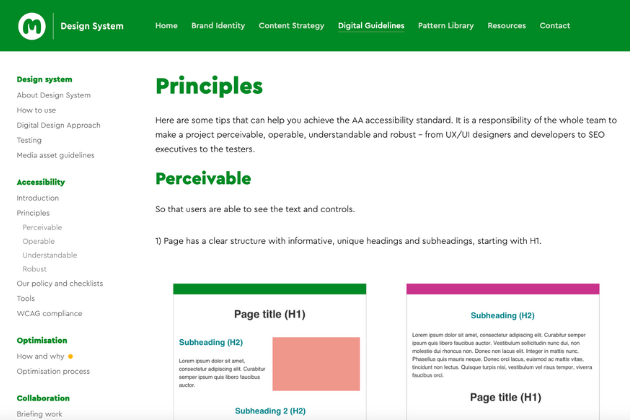
During the Digital Transformation Programme, we received a small set of refreshed UI components, but they came with no documentation or implementation guidance. Working with my team, I led the transformation of this basic library into a fully functioning, shareable, and scalable design system.
This involved:
- defining a clear component and pattern structure
- documenting behaviour, interaction logic, and design rationale
- embedding WCAG accessibility guidance by default
- creating reusable patterns and templates for the wider ecosystem
- aligning internal teams and suppliers around a single source of truth.
The goal was not just to document components, but to enable high-quality, consistent digital experiences at scale.
To support organisation-wide adoption, I selected Frontify as our Design System and Brand hub. Working with my team, I:
-
migrated and documented all components
-
added accessibility, usability and implementation guidance
-
optimised and consolidated patterns as the platform evolved
-
supported developers, content teams and external agencies
-
introduced governance to ensure consistency across 40+ websites.
What began as a single A3 sheet evolved into a mature, accessible and scalable Digital Design System used across Macmillan’s entire digital estate. This reduced duplication, improved onboarding for new teams and suppliers, and enabled faster, more consistent delivery across the organisation.
Brand Refresh
Macmillan Cancer Support
Macmillan’s digital estate included more than 40 websites, each managed by different teams and agencies, leading to inconsistent branding and user experience. As Lead UX/UI Designer, I was responsible for translating two major brand updates into a unified, accessible and scalable digital experience - across the main Macmillan website, flagship fundraising products, and the wider digital estate.
Phase I - 2017 Digital Brand Refresh
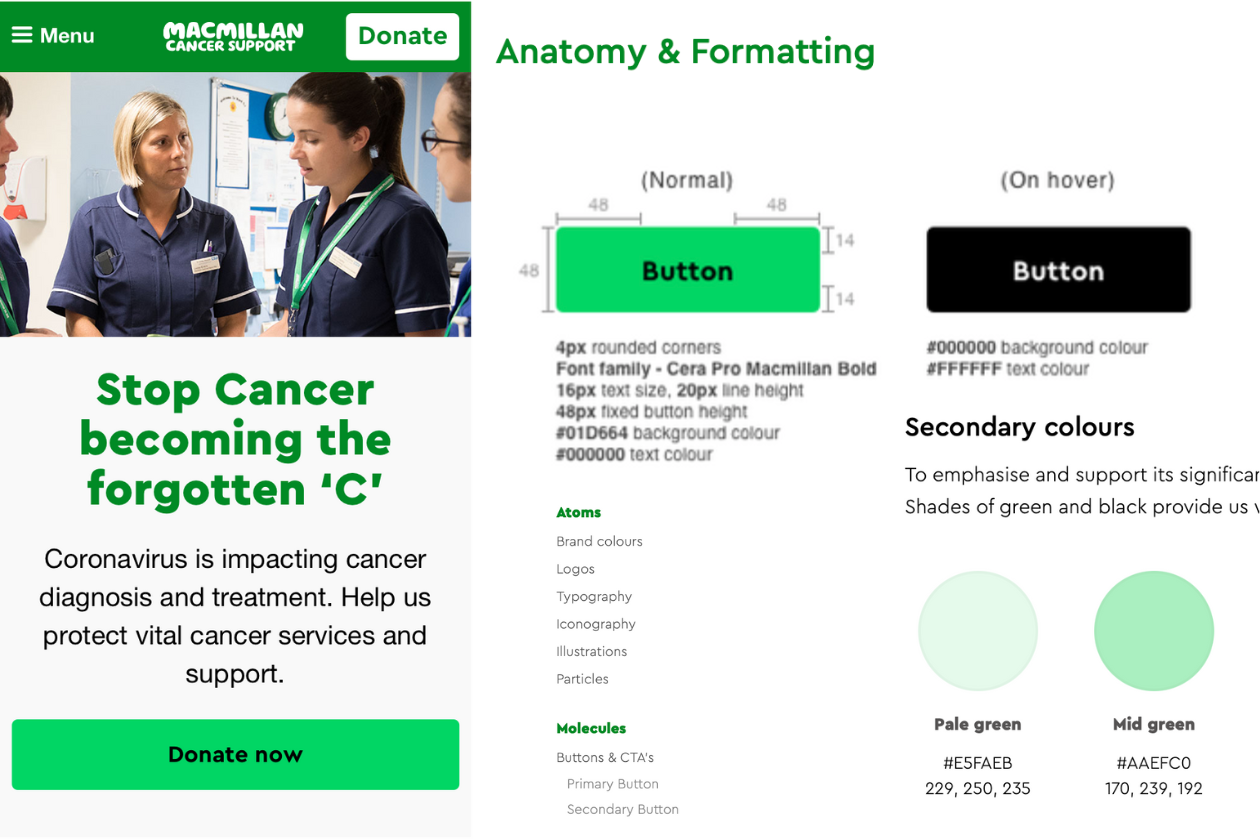
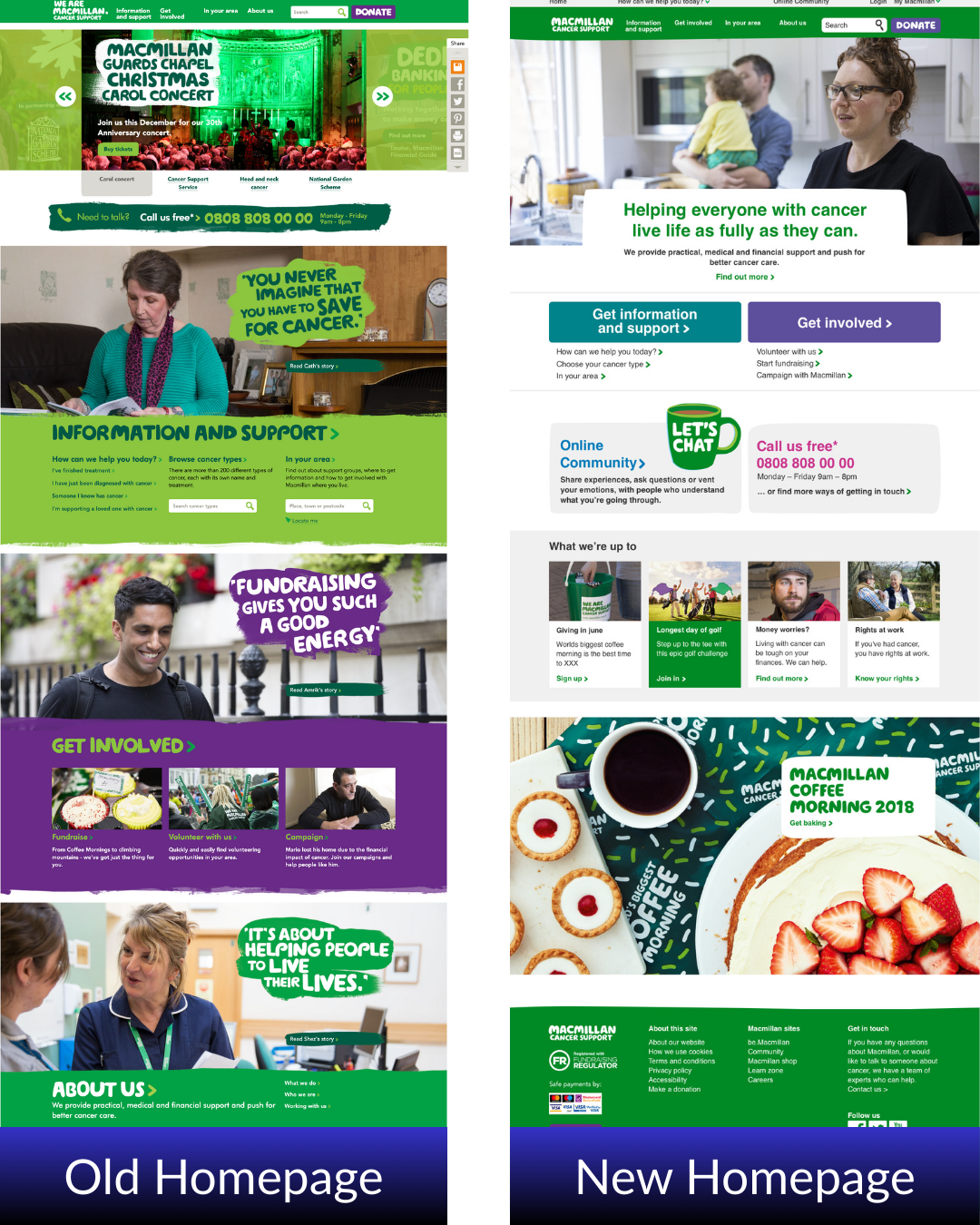
When I joined Macmillan in 2017, the charity introduced an expanded colour palette and a refreshed visual direction. Working as Senior UX Designer and Design Lead, I partnered with our Digital Designer and Product Owner to apply the new brand across the main Macmillan website and key fundraising product websites, ensuring a consistent and updated experience for millions of users.
This work included:
-
Redesigning the Macmillan homepage to reflect the new visual identity
- Redesigning key user journeys and site navigation to improve user experience
-
Updating styles and components across core pages and fundraising journeys
-
Establishing the foundations of what later became our full Design System
Although smaller in scale than the later transformation, Phase I revealed just how fragmented the digital estate had become - highlighting the need for a scalable, component-based approach and setting the stage for the major rebrand that followed.
Phase II - 2022 Full Digital Rebrand
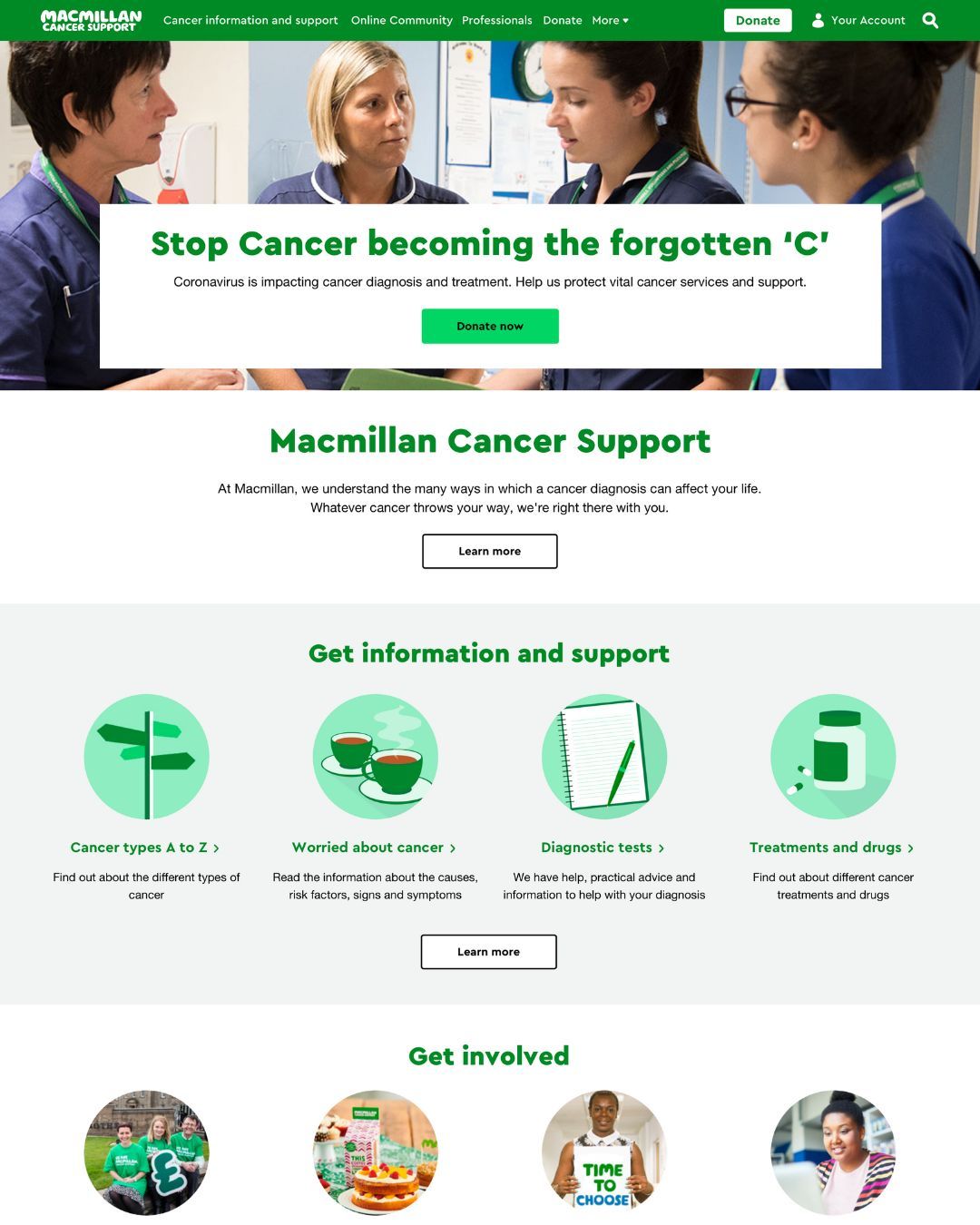
In 2021, Macmillan introduced a major brand identity shift (“compassionate warrior”), triggering the largest design programme in its digital history. I was appointed Lead Designer / Project Lead for the digital rollout, responsible for delivering the new brand consistently across 40+ internal and externally managed websites.
This required coordinating work across multiple development teams, product owners, the Brand team, content designers, and several external agencies — each with their own processes and interpretations of the new brand. Alongside my team, I:
-
Rebuilt the entire Digital Design System to reflect the new brand - redesigning 100+ components and 150+ templates, with accessibility and usability embedded into every pattern
-
Defined guidelines and governance enabling dozens of teams to implement the brand correctly
-
Provided design QA, development support and agency sign-off throughout implementation
-
Managed prioritisation, planning, and coordination across a complex multi-team roadmap.
The scale of this rollout required tight leadership, decision-making, and meticulous design governance to ensure consistency across a highly decentralised digital landscape.
Outcome
By the end of the programme, around 95% of the digital rebrand was delivered - including the main Macmillan site, fundraising platforms, support content, information hubs and third-party managed sites. The new design system significantly strengthened brand consistency, accessibility and usability across the entire ecosystem. It also established a sustainable foundation for future delivery, enabling teams to evolve the platform without reintroducing fragmentation.
How I Can Help
I support organisations with UX, accessibility, Design Ops and digital transformation. This can include improving design maturity and ways of working, building and developing UX teams, coaching and mentoring, strengthening cross-functional collaboration, and embedding inclusive, user-centred practices into everyday delivery.
Get in touch